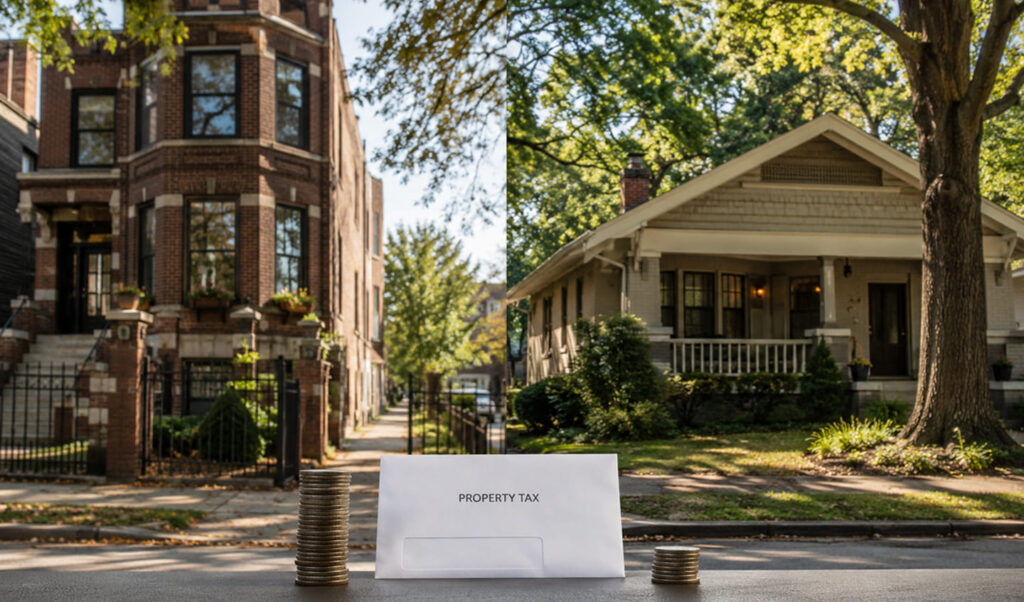

Does it really matter which county you buy in around Atlanta?
Yes. Two homes at the same price in Fulton, DeKalb, Cobb, or Gwinnett can carry different monthly payments, because each county taxes differently. The swing on a mid-priced home can run around $100 a month, so when you’re buying a home in metro Atlanta, the smart move is to compare the real monthly cost by county, not just the list price.
This guide breaks down how Georgia property tax works, how the four big metro counties compare, and how to check the true number on any home before you make an offer.
Table of Contents
How Georgia property tax actually works
Three things drive your bill, and understanding them makes the county differences obvious.
1. Assessment. Georgia assesses property at 40% of fair market value, set by the state constitution. A $400,000 home has a $160,000 assessed value before exemptions.
2. Millage. Each taxing layer (county, school district, and city) sets its own millage rate, applied to the assessed value after exemptions. School millage is usually the biggest piece.
3. Exemptions. Homestead and other exemptions reduce the taxable assessed value once the home is your permanent residence, and the amounts differ by county and city.
Because the millage layers and exemptions differ across county lines, the same list price produces a different bill.
How the four big metro counties compare
Across metro Atlanta, Cobb generally sits at the lower end of effective property tax rates, while Fulton tends to run at the higher end, with DeKalb and Gwinnett in between. The table below is approximate and illustrative, meant to show the relationship, not to price your specific home.
| County | Approx. avg effective rate | Illustrative tax on a $400k home |
|---|---|---|
| Cobb | ~0.7–0.8% | ~$3,000/yr (~$250/mo) |
| DeKalb | ~0.95–1.0% | ~$3,850/yr (~$320/mo) |
| Gwinnett | ~0.95–1.0% | ~$3,900/yr (~$325/mo) |
| Fulton | ~1.0–1.05% | ~$4,150/yr (~$345/mo) |
Approximate average effective rates per SmartAsset and tax-rates.org (2025); figures vary by source, by city within each county, and by exemptions. Amounts shown are before homestead exemption and are illustrative only. Confirm the actual figure on each home’s tax record.
Why the same price isn’t the same payment
Put numbers on it. On a $400,000 home, the gap between the lower-rate and higher-rate counties in the table works out to roughly $100 a month, or about $1,200 a year, before any homestead exemption.
Over a long mortgage, that adds up to real money, and it changes what you can comfortably afford. So when you compare two homes listed at the same price across county lines, you’re not actually comparing equal monthly costs. That’s the whole point: shop the monthly number, not the sticker.
Homestead exemptions and the HB 581 catch
One rule trips up even longtime Georgians. House Bill 581, the “Save Our Homes Act,” created a statewide floating homestead exemption effective January 1, 2025, that caps annual growth in a homestead’s taxable value at the rate of inflation.
The catch for metro Atlanta: most of the area’s large school districts, including Fulton, Cobb, DeKalb, and Gwinnett, opted out of the cap, and several county governments (such as Cobb and Gwinnett) did too. Fulton’s county government actually opted in, but its school district opted out, and school taxes are the largest slice of the bill. So if you’re buying here, you generally can’t count on the HB 581 inflation cap, and whether any piece applies depends on the home’s exact county, city, and school district.
You’ll still get the standard homestead exemption once the home is your permanent residence, and many counties offer additional local exemptions. The exact savings depend on where the home sits. Confirm the current exemptions with the county tax commissioner or a tax professional for your situation.
How to check the real number before you offer
You don’t have to estimate. I run the same process for buyers on every shortlisted home:
1. Pull the property’s tax record from the county tax commissioner or assessor to see the current bill.
2. Check which exemptions apply for a primary residence in that county and city.
3. Convert to a monthly figure and add it to your mortgage, insurance, and any HOA, so you see the true monthly cost.
4. Compare homes on that monthly number, not the list price.
This is part of matching the area to your budget before we ever tour, which I cover more on the Atlanta real estate guide.
One more difference: how Georgia closes
If you’re moving in from another state, know that Georgia law requires a licensed attorney to conduct the closing, so an attorney runs the process from start to finish. If you’re selling elsewhere first, I’m licensed in Illinois, Florida, and Georgia and can coordinate both sides of the move. See the relocation guide.
Metro Atlanta property tax FAQs
Which metro Atlanta county has the lowest property taxes?
Among the four largest, Cobb generally sits at the lower end of effective rates, with Fulton tending toward the higher end and DeKalb and Gwinnett in between. Rates vary by city and by year, so confirm the figure on the specific home rather than relying on the county average.
How is property tax calculated in Georgia?
Georgia assesses property at 40% of fair market value, subtracts any exemptions, and applies the combined county, school, and city millage to what’s left. A $400,000 home starts from a $160,000 assessed value before exemptions.
Do I get the HB 581 inflation cap in metro Atlanta?
Often not. Most of metro Atlanta’s large school districts opted out (Fulton, Cobb, DeKalb, Gwinnett), and some county governments (Cobb, Gwinnett) did as well, while a few pieces opted in, like Fulton’s county government. Whether any cap applies depends on the home’s exact county, city, and school district.
Does buying a home reset its property taxes?
The assessed value is reviewed around a sale, and your exemptions are based on your own primary-residence status, so the bill you inherit may differ from the prior owner’s. Always budget from the current assessment and your own exemptions, not last year’s tax bill.
So how should county taxes shape your search?
Pick your metro Atlanta area for the life you want first, then let the real monthly tax number refine the budget. Two homes at one price can cost very different amounts each month, and once you know each county’s number, you can compare them honestly and decide with the full picture.